
3T: Intentional & Methodical Reflection
“The more you pause, the more you will progress.”

Welcome to Three Things Thursday (3T), a weekly post designed to help you take actionable steps towards personal and professional growth. 🌱

1. Question(s)
Last week, I asked, “How do you want to feel one week from now?”
Ideally, you planned backwards from that feeling so that you could achieve it by today.
How did it go?
How are you feeling now?
Do you want to replicate that good feeling?
or
If you fell short, are you interested in preparing for a course correction? Do you really want to achieve this feeling by next week?
It’s okay if not. It’s also okay to ditch this goal for a new one — or even ditch the entire thing momentarily.
But if you’re seriously interested in growth, carry on with this week’s actionable insight.
2. Actionable Insight ➡️ Make time to reflect.
Intentionally and methodically reflect.
Not just the ol’ “ah, yeah, well, I thought about it and I think I’ll do better next time.”
It’s not only high schoolers that have said that to me. Hell, I have even thought it to myself from time to time. Deep down, I think we all know that level of singular, mental reflection isn’t sufficient to produce better results next time.
Einstein’s adage comes to mind:
“Insanity is doing the same thing over and over and expecting different results.”
Unless you’re a philosophical determinist and/or want to go down the rabbit hole of quantum physics,1 let’s begin now with some ways to intentionally and methodically reflect.
If you’re really in need of the path of least resistance right now, go with the simplest approach.
Using your nearest writing tools or processors, jot down your reflection with responses to these few questions:
✅ What went well? / What would you duplicate?
❌ What didn’t go well? / What would you discard?
➡️ With your responses to those two question frames in mind, what might be your single, most impactful action item, that would help you achieve your goal next time?
✍🏼 Again, bonus points for writing your reflection down or typing it after reading this and placing it somewhere you’ll see it — especially the follow-up action item — throughout the week.
One of my personal favs and easy framework for reflection: grows and glows.2 List:
🌱 In what ways could you grow?
🌞 In what ways did you glow?
📌 With the above in mind, what’s your next step?
If you’re using a kanban board or visualizing your progress3 — even if you’re using a checklist — examine your done column or crossed off items. What can you learn from completed actions?
In his Modus Minute, Jim Benson, suggests labeling completed items as painful, wonderful, or neutral. Then, discussing the why behind the positive and negative experience ones.4
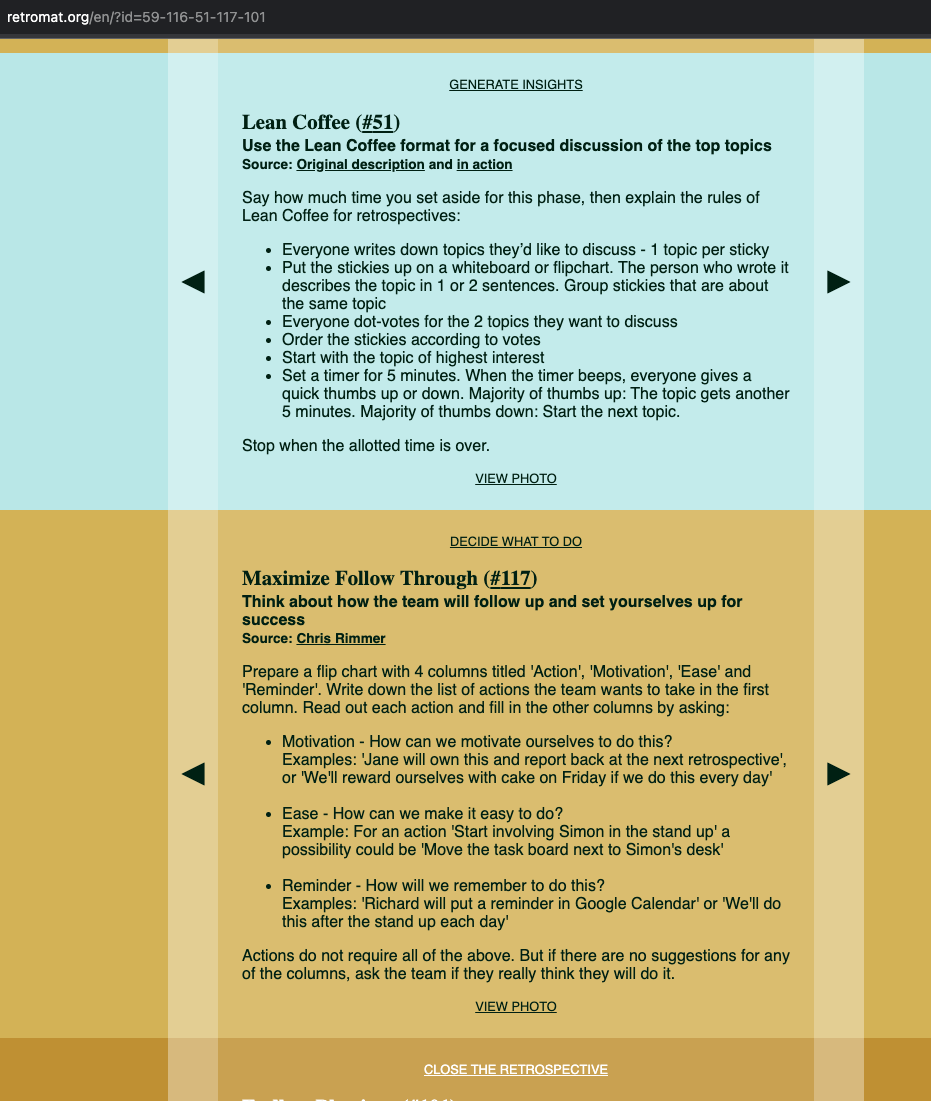
If you have some time to more carefully design your reflection or if you’re facilitating a retrospective with a team, I highly recommend checking out Retromat.5 Once you get past the site’s early internet aesthetic, you’ll find a wealth of customizable options for methodical, intentional reflection.
Retromat breaks down a variety of options, often with pictures, for each part of a typical retrospective:
Setting the stage.
Gathering data.
Generating insights.
Deciding what to do.
Closing the retrospective.
In reflecting individually on this week’s question(s) and working towards continuous improvement, the “Maximize Follow Through” option (#117 on Retromat) could be helpful. Before trying to achieve your goal for next week, write down how you will handle motivation, ease, and reminders.
✍🏼 I cannot stress enough — To totally benefit from this intentional reflection actionable insight AND ACTUALLY ACHIEVE THAT FEELING or GOAL YOU WANT, I STRONGLY SUGGEST writing down your responses to one set these reflective questions. (okay, I’ll stop nagging now. heh 😅)
3. Quote
As The Agile Educator, my aim is not to depress but to inspire — although I want to note a caution/trigger warning as I wrap up this post with a quote on death once more — if you’re not in the headspace to handle a reminder of our mortality, kindly close out this page now.
***
If you find the concept of memento mori helpful, keep reading/listening.
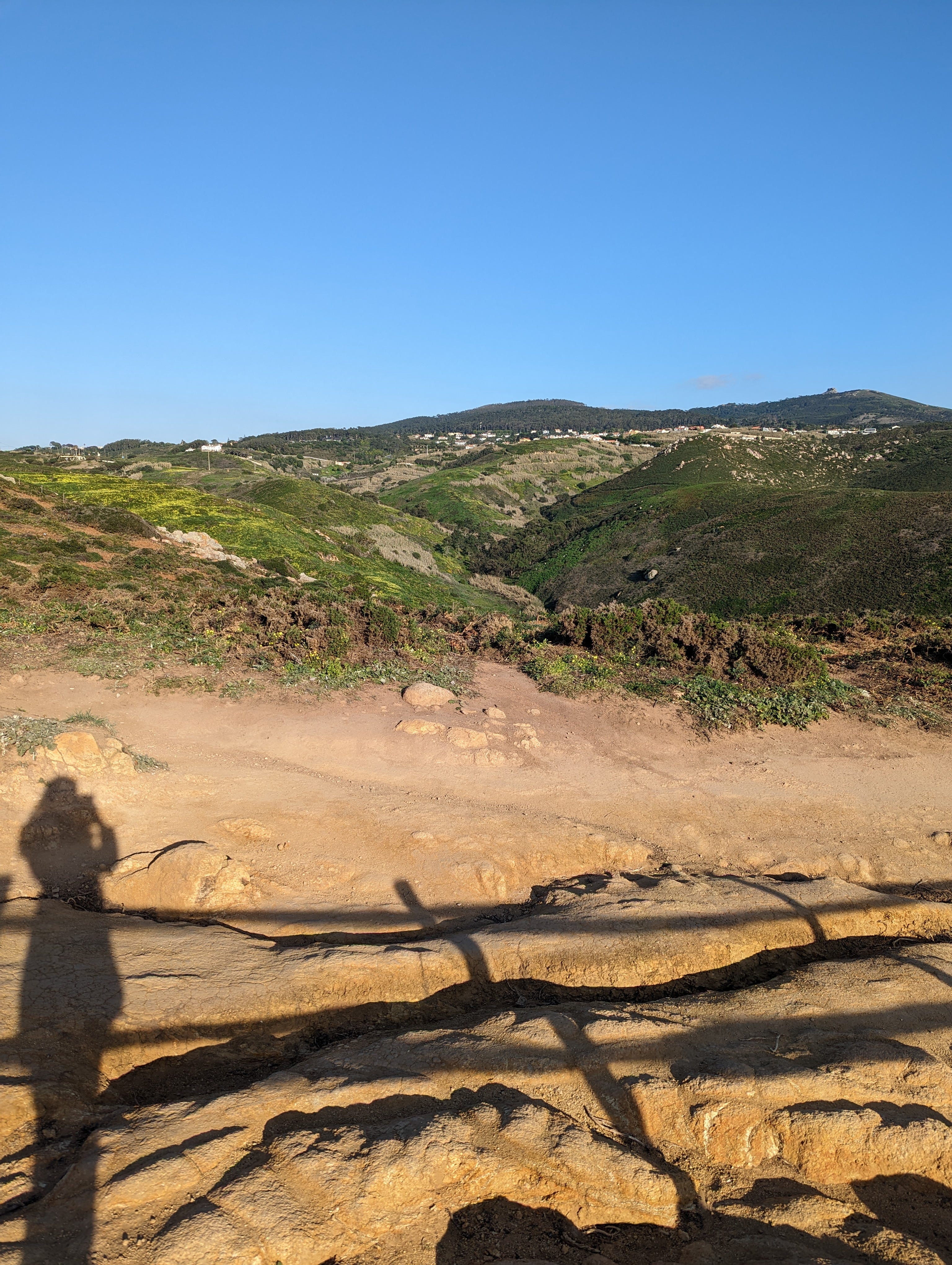
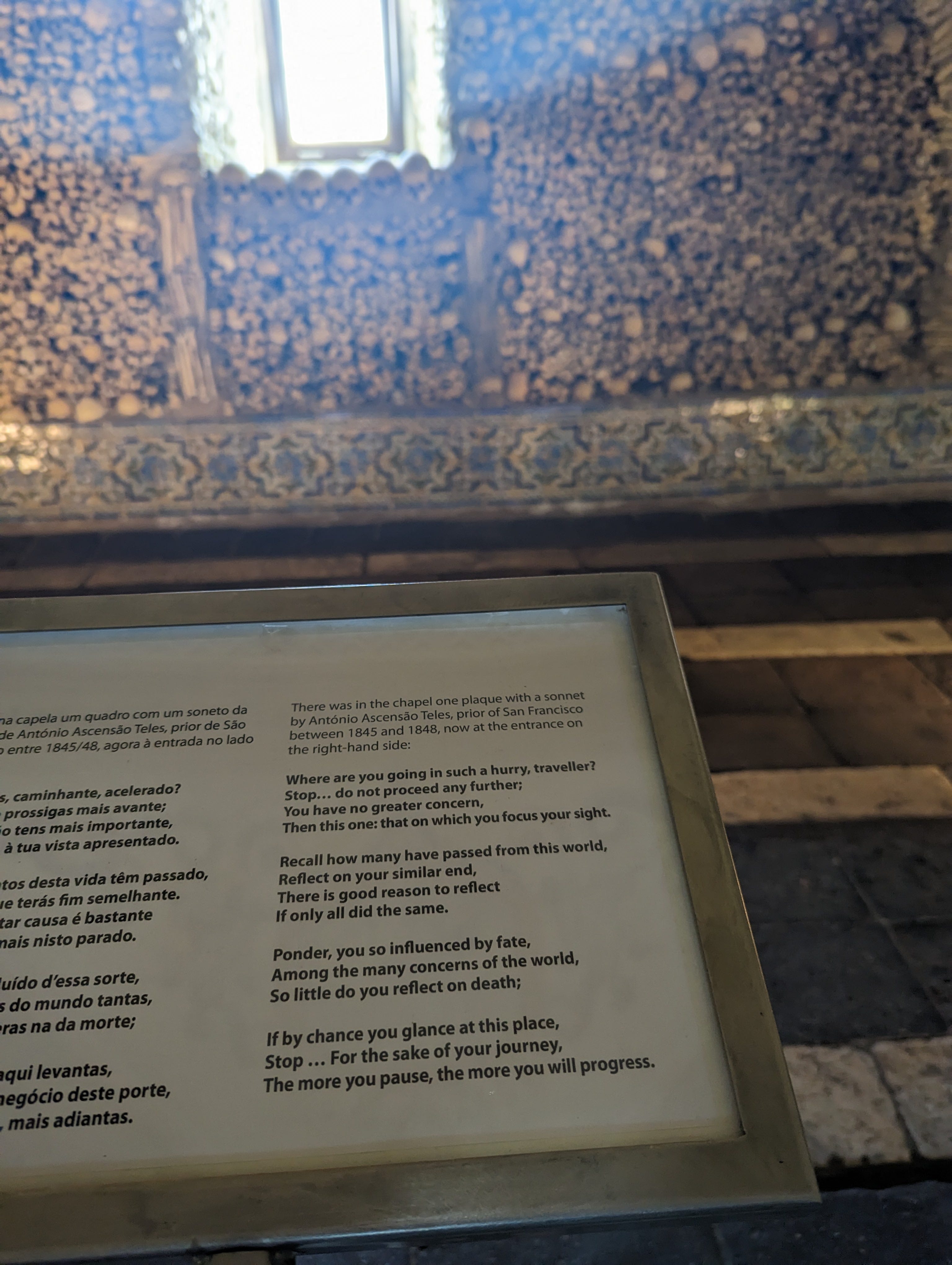
Back in March, I visited the Chapel of Bones in Évora, Portugal. There, I found a sonnet that speaks to the importance of pausing to reflect by António Ascensão Teles from the mid-1800s that read:
Where are you going in such a hurry, traveller?
Stop… do not proceed any further
You have no greater concern
Th[a]n this one: that on which you focus your sight
Recall how many have passed from this world,
Reflect on your similar end,
There is good reason to reflect
If only all did the same.
Ponder, you so influenced by fate,
Among the many concerns of the world,
So little do you reflect on death;
If by chance you glance at this place,
Stop… For the sake of your journey,
The more you pause, the more you will progress.
“The more you pause, the more you will progress.”
Is that true? Try it. See for yourself this week.
As always, thank you for the gift of your time and attention.
I hope you enjoy reading and/or listening to these posts as much as I love writing and recording them. If you’re able to support my work, I’d be grateful.

If you’re interested in tracking your grows and glows in one on one meetings, feel free to download my 1:1 Meeting Template. It’s free! :) https://www.theagileeducator.com/resources
Want to learn more about visualizing your progress using an agile approach known an kanban? Check out my post on boosting your agility from The Agile Educator.
Modus Minute, Jim Benson. From his LinkedIn post about it: “Your Personal Kanban DONE column is waste if you aren't learning from what you've done.
If you are doing a retrospective by forcing everyone to remember what happened over a very busy and stressful time, you will be disappointed ... every ... time.
This will help. Immediately. See what works. See what to improve. Know the delta.”